
You Know Where the Ball Is Going. So Why Can't You Get There?
You Can Play More, Practice Harder, and Work on Your Game…
But if your body doesn’t have the mobility, strength, balance, and control to move the way pickleball demands, you can still feel a step behind — even when you know exactly where the ball is going.
That’s because getting to more balls isn’t just about anticipation or knowing where to move.
It takes mobile hips, strong legs and glutes, a stable core, good balance, and the ability to quickly change direction to move efficiently around the court.
Many pickleball players know where they need to be, but their body simply doesn’t get them there fast enough. Limited mobility, poor balance, and a lack of strength or stability can make it harder to move quickly side to side, react at the kitchen, change direction, and recover for the next shot.
The result? You can feel a step behind, reaching for balls you know you could have gotten to and struggling to move as quickly and confidently as you want.
The Real Key to Moving Better on the Court
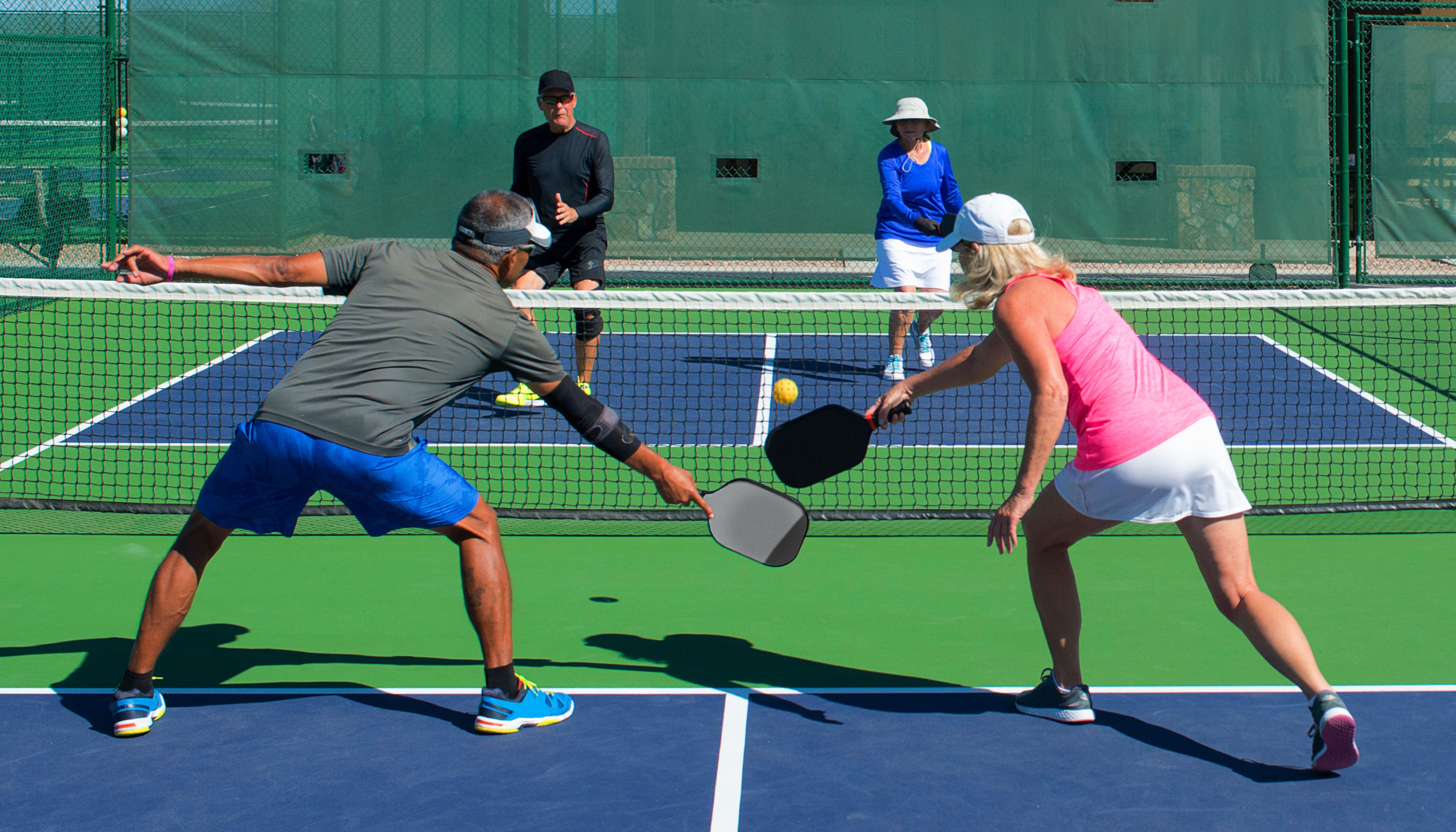
Moving better on the pickleball court isn’t just about playing more games or practicing your footwork. It’s about building a body that can move the way the game demands.
When your hips move freely, your legs and glutes are strong, your core keeps you stable, and you have the balance and control to change direction quickly, you’re better equipped to move side to side, react faster at the kitchen, recover between shots, and get to more balls.
That’s why mobility and pickleball-focused strength work are so important — and exactly what this challenge is designed to help you build.
Over 7 days, you’ll combine daily mobility work with pickleball-focused strength routines to improve the movement, balance, and control you rely on every time you step onto the court.
In just 7 days, you’ll:
✔ Follow daily mobility routines to help you move more freely on the court
✔ Complete 3 pickleball-focused strength routines to build strength, balance, and stability
✔ Strengthen your legs, glutes, core, and key stabilizing muscles
✔ Build better control for quick lateral movement and changes of direction
✔ Work toward feeling quicker at the kitchen, more confident in your movement, and ready to get to more balls
Build the Body You Need to Move Better on the Court
Over 7 days, you’ll build the mobility, strength, balance, and stability your body needs to move quicker and more confidently on the pickleball court—so you can:
Get to More Balls
Build the mobility and strength to move quicker side to side, cover more of the court, and reach balls that used to feel just out of reach.
React Faster at the Kitchen
Improve your balance, stability, and control so your body can react quickly and stay ready for the next shot.
Stop Feeling a Step Behind
Build better court movement and change-of-direction control so your body can keep up with where you already know you need to be.
Here’s What You’ll Build in 7 Days
✔ Improve mobility through your hips, legs, and upper body
✔ Strengthen your legs, glutes, core, and key stabilizing muscles
✔ Build better balance, stability, and control on the court
✔ Improve your ability to move laterally and change direction with control
✔ Build the strength and mobility to react and recover more efficiently between shots
✔ Feel quicker, more capable, and more confident in your movement
Each Session Is:
- Just 15–20 minutes
- Follow-along and easy to do at home
- Built specifically for pickleball players
This isn’t about random stretching or general workouts.
It’s about building a body that can move quicker, react faster, and stay in control on the court—so you can stop feeling a step behind and start getting to more balls.
Why Pickleball Players Lose Mobility and Court Quickness
Your body adapts to the positions and movement patterns you repeat.
Pickleball is fast and reactive — requiring you to move side to side, accelerate forward, stop quickly, change direction, and react to the ball in an instant.
But many of us spend far more time sitting, driving, or moving in straight lines than we do moving laterally and changing direction. Over time, this can contribute to stiffness and leave key muscles — especially your glutes, core, hips, legs, and stabilizing muscles — less prepared for the quick movements pickleball demands.
Over time, this can show up as:
- Tight or restricted hips
- Difficulty moving quickly side to side
- Feeling slow getting forward to the kitchen
- Poor balance when reaching for a ball
- Difficulty stopping and changing direction
- Feeling like you're always a step behind
- Seeing where the ball is going but struggling to get there in time
If your hips, core, glutes, and legs aren't working together to move and stabilize your body, quick court movement becomes harder.
That's when you can know exactly where you need to go — but your body doesn't get you there fast enough.
If that sounds familiar, you're not alone.
Playing more pickleball can improve your skills and anticipation, but simply spending more time on the court doesn't necessarily build the mobility, strength, balance, and stability your body needs to move quicker.
The Mobility & Stability Connection That Changes Everything
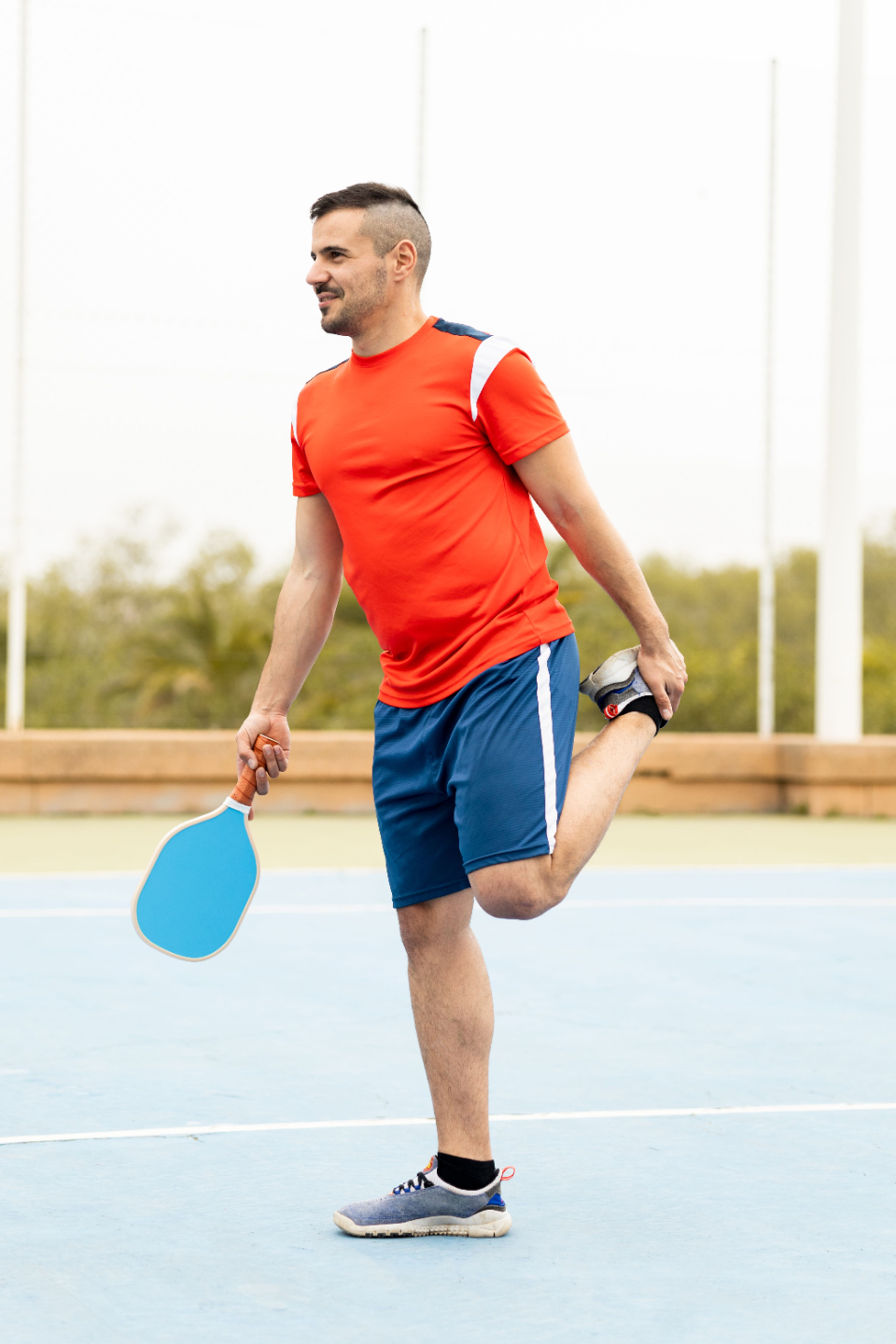
Moving better on the pickleball court isn't just about stretching more or practicing your footwork.
It's about training your body to move, stabilize, change direction, and stay in control during the movements pickleball actually requires.
Every point can ask your body to move laterally, step forward, reach, stop, recover, and immediately change direction again. To do that efficiently, your mobility, strength, balance, and stability need to work together.
When your mobility, strength, and stability are working together:
✔ Your hips move more freely as you cover the court
✔ Your legs and glutes help you push off and change direction
✔ Your core helps you stay balanced and controlled
✔ You can move side to side and recover more efficiently
✔ You feel quicker and more responsive at the kitchen
✔ Your body is better prepared to get to more balls
When those areas are tight, weak, or poorly coordinated:
✖ Side-to-side movement can feel slower
✖ You may struggle to stop and change direction efficiently
✖ Your balance can break down when reaching for a ball
✖ Getting forward to the kitchen can feel harder than it should
✖ You can find yourself a step behind, even when you know where the ball is going
That's why this challenge combines daily mobility with pickleball-focused strength — so you're not just loosening up. You're building the mobility, strength, balance, stability, and control your body needs to move better on the court.
The Root of the Problem isn’t what you think…
Each of us has our own pain points, whether it be tight shoulders and neck, hamstrings, quads, etc. However, what we may not realize is the root of these problems is all connected through one muscle–one you’ve probably never heard of, let alone trained or stretched.
Introducing the Hidden Muscle that is the key to unlocking your full potential.
The psoas (so-as) is the muscle that connects the lower body to the upper body.
It is one of two muscles that makes up the iliopsoas, and is the bridge between your upper and lower body. Almost every movement involves the psoas, making it not only one of the most important muscles in the body, but also the secret to unlocking your full potential.
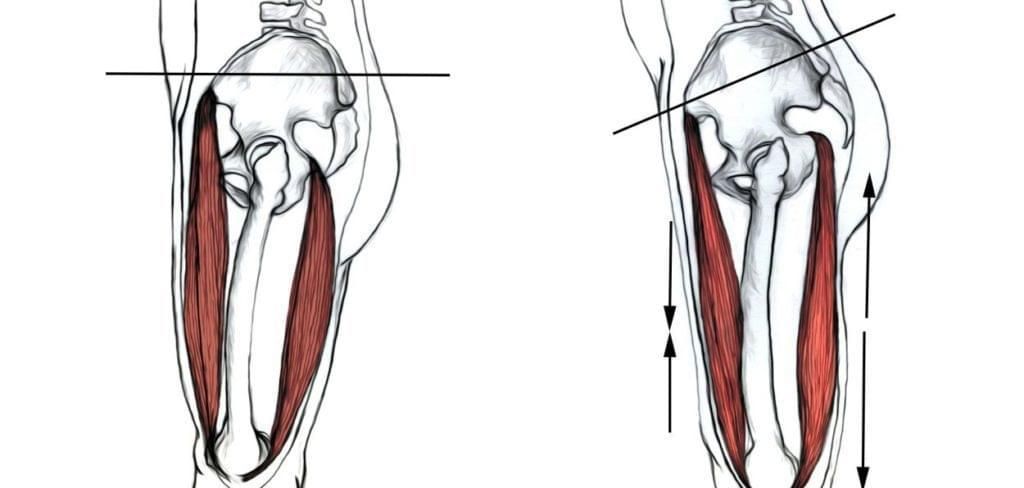
When the psoas is healthy and functioning correctly it creates a neutral pelvic alignment, stabilizing the hips and supporting the lower back and abdomen. When it is unbalanced or tight, there are serious consequences in almost every part of your body, showing up as a pelvic tilt.
What causes the psoas to shorten?
Sitting, whether it be at a desk job, driving, or on the couch, will eventually lead to a shortened and underdeveloped psoas muscle.
Why isn’t everyone talking about this?
Diagnosing the root cause of symptoms can be tricky, and many health professionals struggle to pinpoint this muscle buried deep in your hips. Understand, that this is not your fault! However, now that you know, it’s up to you to do something about it. That’s where we come in.

Unlock your full potential through our sequential method.
Lengthening the muscles, especially the psoas, needs to be done in the right order, with balance and intention. Concentrating on one muscle before the other can actually add to the problem, rather than improving it.
This is why so many people give up when they don't experience results within the first few days. The reality is, lengthening the muscles takes time, but our plan will have you feeling the difference within a couple weeks.
While many of the stretches may be ones you already know, doing the movements in the right order and holding them for the right amount of time will make all the difference. Our goal is to help you unravel all the tissues including the muscle, fascia, connective tissue, and finally the joint itself.
The Shocking Truth of Adaptive Shortening
Adaptive shortening is muscle tightness caused by a muscle being forced to remain in a shortened position for a prolonged period of time. Whether it be driving, sitting at a desk, or on the couch, the cumulative time spent in these positions have real consequences on muscle structure.
This shortening causes a reduced range of motion, a feeling of tightness in the muscles, and added stress on the connected tendons. However, most symptoms will not show up until the muscle has already shortened a significant amount. The results are postural distortion and the replacing of normal contractile elements with non-contractile tissue.
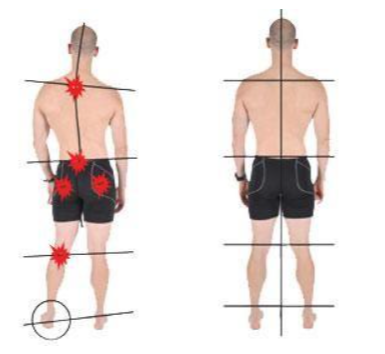
Chances are, your muscles are already unbalanced.
The earlier the intervention, the faster and better the results!
In every movement there are four main functions of the associated muscles:
- Agonists - the muscles being exercised/worked.
- Antagonists - the opposing muscles acting in contrast to the agonists.
- Stabilizers - muscles that hold the joint in place.
- Assistors - muscles that help the Agonist muscles.
Muscle Balance speaks primarily to the agonist and antagonist muscles in any given movement. It is important to have balance to prevent injury, which is why stretching is so important for pickleball players. When one muscle becomes tight, it’s antagonist will also be effected, and can even be injured as a result.
You see, our muscles are the engine through which our body moves. They control balance, our ability to sit, stand, twist, reach, bend, walk, and run. When our muscles become shortened, it causes problems in otherwise healthy people like us.
Here's the truth:
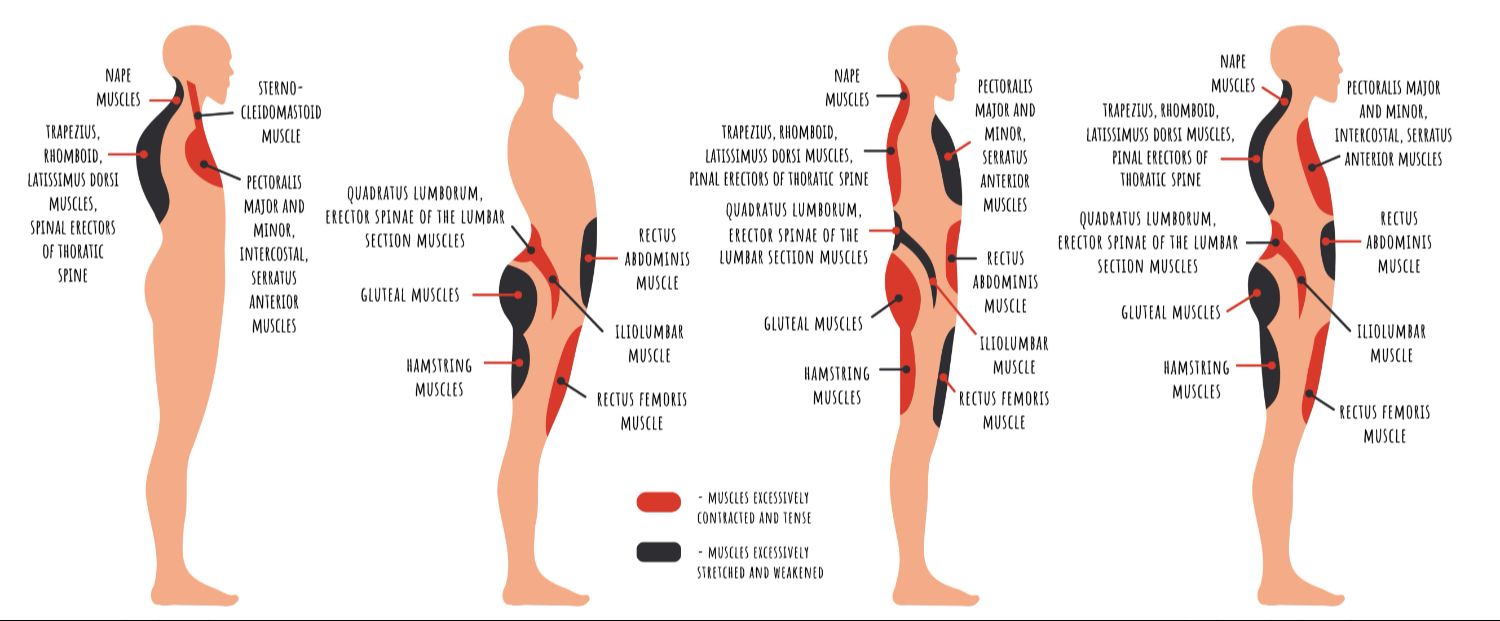
Most people don’t realize that the cause of their problems is tight or shortened muscles. The impact tight muscles have on the whole body never occurs to us until we start to experience the symptoms. This can show up as a nagging injury, or in poor posture caused by upper and/or lower crossed syndrome.
Shortened muscles and the resulting limited range of motion in the joints affects nearly everybody, but few realize they impact every aspect of the whole body. Diagnosing adaptive shortening can be tricky. Chances are, you won’t discover the problem until it has already limited your range of motion. The good thing is that it CAN be reversed.
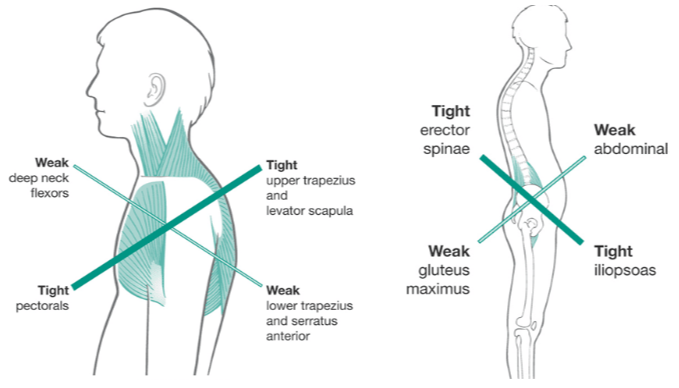
Why stretching for 5 minutes before playing pickleball isn’t the answer.
Knowing you have adaptive shortening in the muscles is one thing. Knowing how to take steps to reverse it is another challenge altogether.
Most of us were taught that stretching for a couple minutes before exercise would help loosen the muscles and prevent injury, but this is not the case. Holding a static stretch for 10 seconds will do nothing to lengthen the muscle, and barely scratches the surface of what needs to happen in the structure of the muscle.
Life is busy, so for most of us the idea of stretching for an hour every day may be an unrealistic goal. That’s where we come in.
Our mobility program has been designed to make the most of your time, targeting problem areas in a specific sequence to attack muscles from a variety of angles. Muscles have to be unpacked and balanced in a particular way to have the desired result. We also work on strengthening stabilizing muscle to ensure there is a strong muscle base for your movements.
It is a combination of practices maintained over time that will help your muscles lengthen and sustain a healthy range of motion, especially as you age.
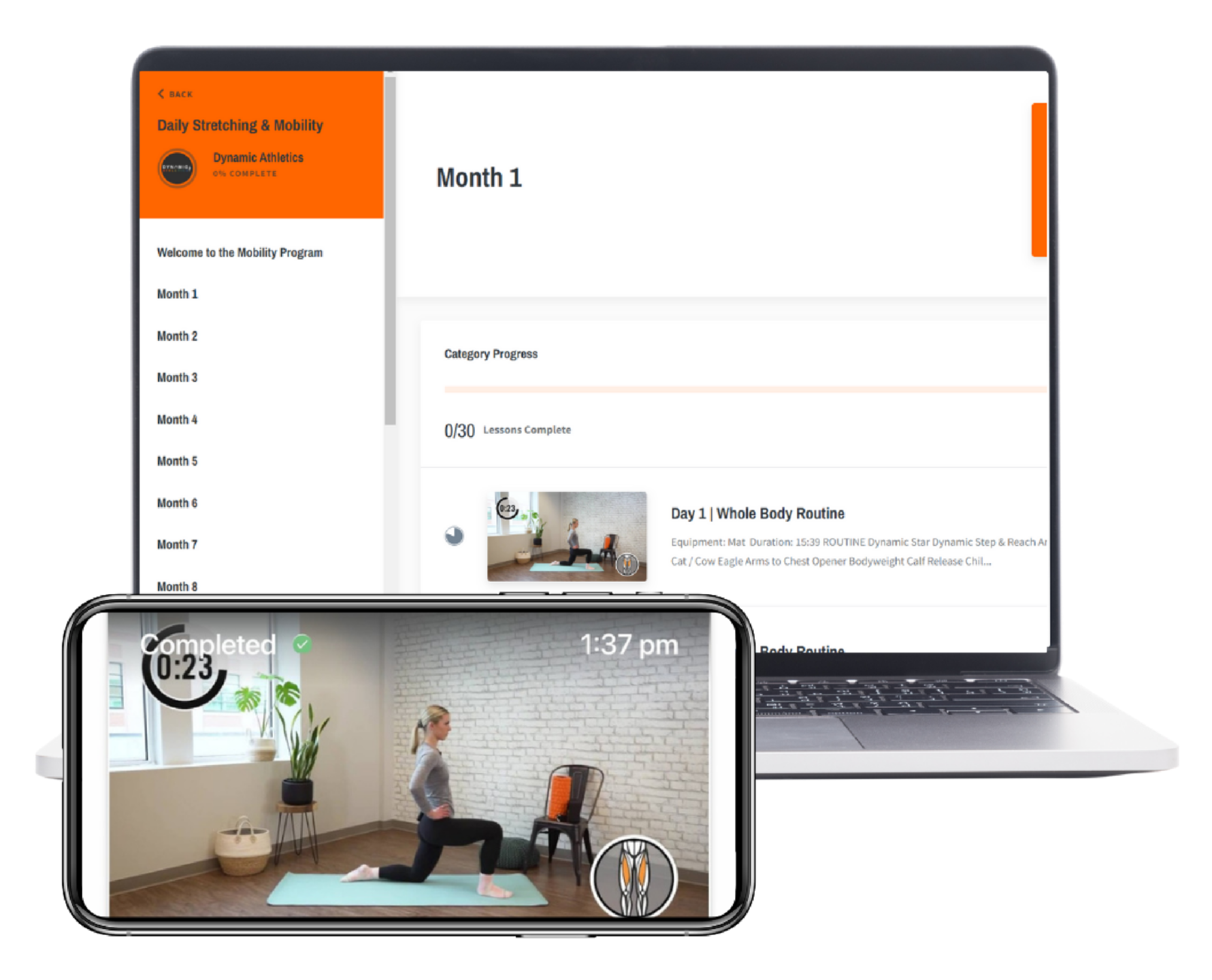
Unlock your muscles with our dynamic method.
Creating muscle balance needs to be done with balance and intention. Our sequential, dynamic method works to unravel all the tissues including the muscle, fascia, connective tissue, and finally the joint itself. Through a combination of dynamic movements that both strengthen and stretch, and static deep-tissue stretches, our program makes injury prevention easy.
Our program includes daily stretching videos and long form mobility routines all designed to correct muscle imbalances common to pickleball players. These videos are designed to be easy to follow, and track your progress over time.
OUR PROGRAMMING
Easy to follow video format, designed for pickleball players.
Program Length: Ongoing
Average Routine Duration: 15 Minutes
Goal: Develop and maintain a healthy range of motion through a combination of static stretches and dynamic movements.

Program Length: Ongoing
Average Routine Duration: 25 Minutes
Goal: Correct muscle imbalances and strengthen supporting muscles so you can play pickleball strong and prevent injury. Minimal equipment, follow along at home.
Average Routine Duration: 15 Minutes
Goal: Address some of the most common injuries for pickleball players through a combination of mobility and strength training. Programs: Ankle Rehab, Elbow Prehab, Shoulder Prehab, Lower Body Prehab, and Neck Tension.
What Our Members Are Saying
"I was out of the game for about 3 weeks after a hip flexor strain made it too painful to play. I bought this program and within 7 days I was back on the court and by week 2 I was feeling 100%. I have continued with the daily stretching and mobility program to prevent any other injuries and have started to incorporate the strength training routines to improve my game even further. " -- Jack L.
"I've been using the daily stretching and mobility program for a couple of months now and have noticed a huge difference in how I feel while playing. My mobility has improved, which has made it easier to receive the ball and therefore win more rallies." -- Corrine M.
"I'm just getting started with Dynamic Pickleball and so far so good. The videos are easy to follow along with and the program keeps me accountable. The best part is I don't have to leave home and can easily fit the daily routines into my busy life." -- Dan C.
ABOUT DYNAMIC PICKLEBALL
Dynamic Athletics began in 2017 with the creation of Dynamic Cyclist. Our team has grown over the past few years as we have worked with our members to provide ongoing injury prevention and training specific for cyclists. In 2024, we launched Dynamic Pickleball as a means of providing a similar service to pickleball players. Our goal is to provide quality content from industry professionals in a form that is easy to use and experience results.
Our Team is based in Kelowna, BC, Canada and is made up of a small group of athletic therapists, coaches, and weekend warriors who want to play pain free!
HOW IT WORKS
Starting immediately after sign up you'll be given access to all programming in your membership area. You can access on any device like your phone, tablet or computer.
-
Daily, easy to follow stretching videos.
-
15-25 minutes in length.
-
Designed specifically for pickleball players, by pickleball players.
-
100% Satisfaction Guarantee
-
Access to ALL bonus programming
With the 7 day FREE trial you will have access to ALL Dynamic Pickleball content.
100% Guarantee - No Questions Asked Money Back Guarantee
Even if you forget to cancel, or for some reason you don't enjoy the content and community, we'll refund your last months payment right away. Just send us a quick email and no worries. We're here for the long term and will respect your choice!
Membership Pricing Options
After your trial, membership is either $9.99/month or $85/year. No contracts or cancellation fees. Cancel during the trial and you'll never be charged.
100% Guarantee - No Questions Asked, Money Back Guarantee
Even if you forget to cancel, or for some reason you don't enjoy the content and community, we'll refund your last months payment right away. Just send us a quick email and no worries. We're here for the long term and will respect your choice!